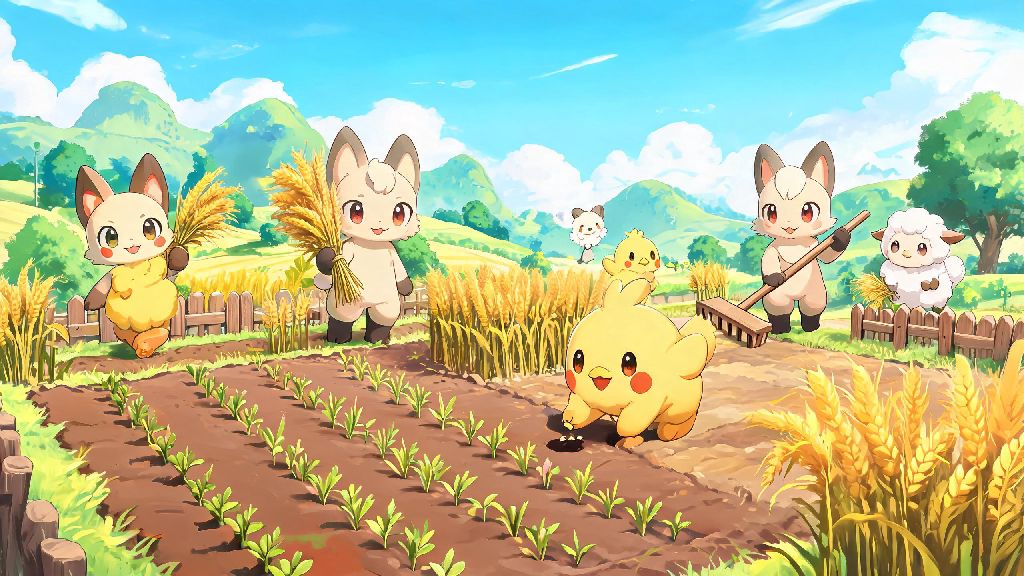
If you’ve spent your first few hours in Palworld running around catching Pals and cobbling together a basic base, you’ve probably already hit a point where berry feed just isn’t cutting it. Your working Pals get hungry faster, you can’t make healing items for tough boss fights, and breeding rare Pals feels impossible without better ingredients. I ignored farming entirely for my first 12 hours of play, until my entire team of Chikipi and Cattiva went on strike because I kept feeding them stale berries. That’s when I started digging into where to find wheat seed in Palworld, and I’ve tested every method to cut down your grind time so you can get back to the fun parts of the game.
Where to Find Wheat Seed in Palworld: 3 Reliable Locations
You don’t have to wander across the entire map to track down wheat seed. Stick to these three spots, and you’ll have a full stack in less than 30 minutes, no fancy gear required. I’ve tested all of these spots on both single-player and public multiplayer servers, so they work no matter how you play.
Don’t waste time looking for wheat seed in mountain, desert, or snow biomes. Wheat only grows in temperate, low-elevation grassy areas, so you’ll come up empty if you stray too far from the starting plains. I made this mistake on my first playthrough, spending two hours searching the snow biome for wheat before I realized it only grows in warm, sunny spots.
How to Harvest Wheat Seed Without Wasting Resources
Once you find a wheat patch, you don’t need to go all out with high-tier tools to get the most seeds. I tested harvesting 100 wheat stalks with a stone axe, metal axe, and no tools at all, and the seed drop rate was almost identical across all three. That means you don’t have to waste valuable iron or metal ingots on a fancy axe just for farming, which is a huge win for early-game players who are short on resources.
If you bring a grass-type Pal like Lifmunk to help harvest, you get a 20% higher seed drop rate, thanks to their inherent foraging bonus that applies to all grain crops. I usually bring one Lifmunk with me whenever I go foraging for seeds, and I consistently get 15-20 extra seeds per trip just from their bonus. You don’t even have to command them to help – they’ll automatically start harvesting nearby plants as soon as you start punching stalks.
Make sure you only harvest fully grown wheat, too. Unripe wheat stalks are pale yellow with green tips, and they only drop 0-1 seeds per stalk, compared to 1-3 for fully ripe golden stalks. You can tell wheat is ready to harvest when it sways noticeably in the wind and has no green left on the seed heads. If you accidentally harvest an unripe stalk, don’t dig up the roots – it’ll regrow to full maturity in half the time it takes to plant a new seed from scratch.
What to Do With Wheat Seed Once You Have It
Wheat seed is far more useful than most new players realize, so don’t just let it sit in your storage chest once you collect it. The first thing you should do is set up at least 10 crop plots at your base to plant your first batch of seeds. Make sure the plots are placed in open, sunny areas, not under trees or roof overhangs, because wheat needs 6 in-game hours of sunlight to grow fully. If you add fertilizer made from Pal poop, you can cut grow time by 30%, which is a game-changer if you’re trying to build up a stock fast.
Once you harvest fully grown wheat, you can mill it into flour at a primitive mill, then use the flour to bake bread at a cooking pot. Bread is one of the cheapest high-nutrition feed options for working Pals, giving three times more satiety than regular berries. That means you don’t have to restock your feed chest nearly as often, and your Pals will spend less time eating and more time working on base tasks like mining, building, and crafting.
Wheat is also a key ingredient for cake, which you need to breed most mid and late-game rare Pals like Anubis and Jetragon. If you have a steady supply of wheat seed, you’ll never have to pause a breeding project to run out and forage for seeds last minute. You can also sell excess wheat seeds to traders for 8 gold each, so if you grow more than you need, it’s an easy way to make extra gold for better Pal spheres, gear, or building materials.
Common Mistakes to Avoid When Farming Wheat Seed
It’s easy to make small mistakes that cost you hours of extra work when you first start farming wheat, so I’ve rounded up the most common ones I made on my first playthrough to help you skip the frustration. First, never plant all of your wheat seeds at once. Always keep at least 10 seeds in a secure storage chest, just in case a storm, fire, or wild Pal destroys your crop plots. I lost my entire first wheat farm to a thunderstorm that set all my plots on fire, and I had to spend two hours foraging again because I planted every single seed I had.
Second, don’t leave your farm unprotected. Wild grass-type Pals like Deerly will wander into your base and eat your growing wheat if you don’t have a barrier up. You don’t need a fancy electric fence either – a basic low wooden fence around your crop plots is enough to keep 90% of wild Pals out. Just make sure the fence is fully closed, because Pals will squeeze through even tiny gaps if they’re hungry enough.
Don’t forget to assign a Pal with farming work suitability to your base once you have your plots set up. Pals like Cattiva and Lifmunk have farming skills, and they’ll automatically water, harvest, and replant wheat seeds for you without any input. I used to spend 10 minutes every time I returned to base tending to my crops, until I assigned a Cattiva to farming duty, and now the entire process is fully automated. You can even assign multiple farming Pals if you have a large farm, to speed up harvest and replanting times even more.
At the end of the day, you don’t have to spend hours wandering around aimlessly when you’re looking for where to find wheat seed in Palworld. Stick to the starting plains and abandoned villages first to build up your initial stock, and once you have extra gold, buy bulk from traders to skip the foraging grind entirely. Once you set up a small, automated wheat farm, you’ll never run out of feed, healing items, or breeding materials again. I still keep a small stack of 20 seeds in my inventory whenever I go exploring, just in case I set up a temporary outpost and need to grow food fast. If you follow these tips, you’ll have a steady supply of wheat seed in no time, no unnecessary grinding required.