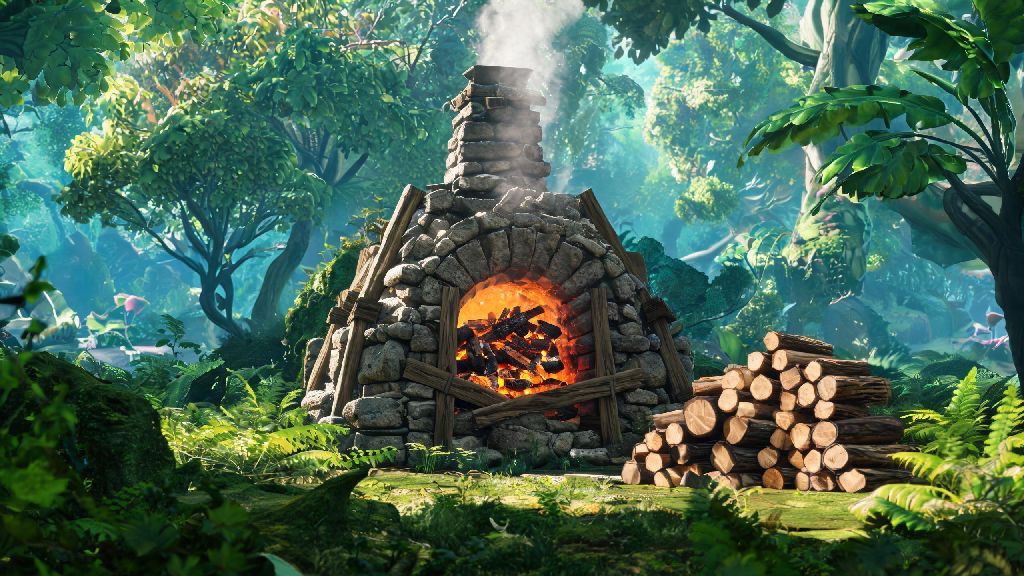
If you’ve spent even a few hours building your Palworld base, you’ve probably hit a point where basic wood fuel just isn’t enough for your furnaces, high-tier cooking, or explosive crafting needs. That’s where knowing how to make charcoal in Palworld becomes one of the most essential early to mid-game skills you can pick up. I wasted almost an entire in-game day chopping extra wood after running out of charcoal mid-rocket launcher craft, so I’ve put together everything you need to know to skip that frustration. This guide works for both casual base builders and players grinding to beat all tower bosses.
How to Make Charcoal in Palworld: Core Crafting Steps
The process of making charcoal is surprisingly straightforward, even for brand new players, as long as you have the right prerequisites unlocked first. You’ll first need to reach level 10 to unlock the Primitive Furnace recipe, which costs 20 wood, 10 stone, and 3 flame organs to place. Flame organs are easy to farm from low-level fire Pals like Foxparks, which spawn all over the starting grassy plateau.
Once you’ve placed your Primitive Furnace, all you need to do is add wood to its input slot and assign a Pal with the Kindling work suitability to operate it. Two pieces of wood will convert to one piece of charcoal, and the process runs automatically as long as your Pal has access to the furnace and enough wood in storage. You don’t need a high-level Kindling Pal to make charcoal – even a level 1 Foxparks will work just as fast as a higher-tier fire Pal for this specific task, so you don’t have to waste your rare combat Pals on production work.
You’ll know the process is working when you see small flame particles coming off the furnace, and charcoal will appear in the output slot once each batch is done. You can queue up to 100 wood per furnace at a time, so you don’t have to check back every few minutes to restock supplies.
Best Pals to Assign to Charcoal Production
The only hard requirement for a charcoal production Pal is the Kindling trait, but some Pals are far better suited for the role than others depending on your game progression. For early game players, Foxparks is the perfect pick: they spawn within five minutes of the starting spawn point, have a level 1 Kindling trait, and are easy to catch with basic pal spheres. They’re also small enough to fit in tight base spaces if you have a compact early game setup.
For mid game players who’ve unlocked access to the desert biome, Rooby is a great upgrade. They have a level 2 Kindling trait, and can also help with cooking tasks if you don’t have a dedicated cook Pal assigned to your base. They’re also far sturdier than Foxparks, so you don’t have to worry about them getting knocked out by random wild Pal raids on your base.
Late game players should use Blazamut for charcoal production if they have one. They have the maximum level 3 Kindling trait, and can run up to three furnaces at once if you have a large production line set up. Assign at least one dedicated Kindling Pal to charcoal production if you run a large base – you’ll go through hundreds of pieces a week for ammo, building upgrades, and furnace fuel, so you don’t want production paused because your only fire Pal is off doing another task.
Pro Tips to Farm Charcoal Faster Without Extra Grinding
Once you have the basic production setup down, there are a few small tweaks you can make to cut down on grinding and get a steady, passive supply of charcoal with almost no effort. I’ve tested all of these methods on my own 20+ Pal base, and they cut my charcoal farming time by 70% compared to my original setup.
Charcoal burns 3 times longer than regular wood, so even if you only use it for fuel, you’ll save a ton of time restocking furnaces for high-volume smelting or cooking tasks. It’s also required for a lot of endgame crafts that you might not unlock until 30+ hours into your playthrough, so it’s never a bad idea to stock up extra when you have spare wood.
Never sell extra charcoal to merchants – the pal coins you get are negligible, and you’ll always need more later for endgame crafts. It’s far more valuable to keep it stored than to trade it for a handful of coins that you can earn faster by selling extra ore or unwanted Pals.
Common Charcoal Crafting Mistakes to Avoid
Even though making charcoal is a simple process, there are a few common mistakes that new players make that waste time and resources. I’ve made almost all of these myself, so you don’t have to learn the hard way.
The first mistake is not keeping enough separate wood stockpiled for charcoal production. A lot of new players will queue up 500 wood for charcoal then realize they have nothing left for building repairs, basic crafting, or cooking fuel. I recommend keeping at least 200 wood in a separate storage chest reserved only for charcoal production, so you never accidentally use all your supply for other tasks.
Another common mistake is assigning Pals with other high-priority jobs to charcoal production. If your only Kindling Pal is also assigned to cook food for your base, you’ll end up with hungry Pals and delayed meals if they’re stuck making charcoal all day. Keep one fire Pal dedicated only to charcoal, and another for cooking and other furnace tasks to avoid conflicts.
Always keep a separate storage chest for charcoal so it doesn’t get mixed in with regular wood or other fuel sources. It’s easy to accidentally use charcoal for basic cooking if it’s in the same chest as wood, which wastes your valuable supplies. Don’t make more charcoal than you can store – loose resources left on the ground will despawn after 10 minutes if you don’t pick them up, so you’ll waste all the wood you used to make the extra batches.
At the end of the day, knowing how to make charcoal in Palworld is one of those small skills that makes your entire playthrough way smoother, whether you’re a casual builder or a player grinding to beat all the tower bosses. You don’t need fancy gear or high-level Pals to get started, just a basic furnace and a steady supply of wood. Experiment with the setup that works for your base size, and you’ll never find yourself stuck waiting for charcoal mid-craft again. The small amount of time you spend setting up your production line early on will pay off for dozens of hours of play later.