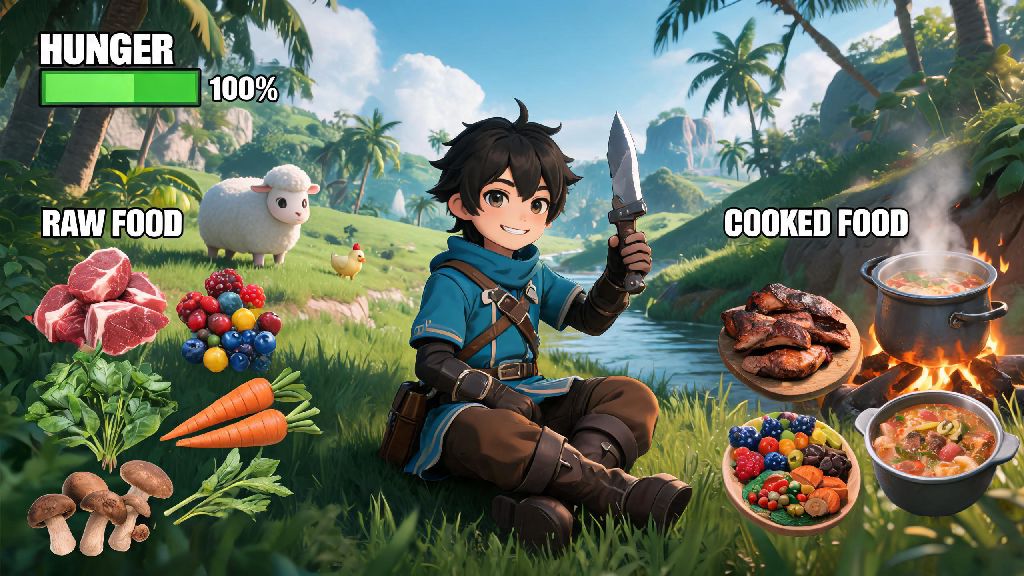
If you’ve spent even an hour running around Palpagos Island chasing Pals, chopping trees, or fending off aggressive wild creatures, you’ve probably already felt that familiar drop in your hunger meter. Figuring out how to eat in Palworld isn’t as straightforward as it sounds at first, especially when you’re just starting out with limited resources and no access to better cooking tools. Skip the mistake of chowing down on raw, low-nutrient berries that leave you hungry again 10 minutes later, and follow these tips to keep your hunger bar full for longer.
How to Eat in Palworld: Basic Controls and First Steps
The core eating mechanic is simple once you know where to look, but the game doesn’t do a great job of explaining it to new players. For PC users, you can either open your inventory, right click any edible item to eat it immediately, or drag the item to your hotbar and press the corresponding number key whenever you need to refuel. For console players, open the item wheel with the left bumper, navigate to the food tab, and select the item you want to eat.
Once you’ve got the basics of how to eat in Palworld down, there are a few small rules you need to remember to avoid frustration. You can only eat food when your hunger meter is at 90% or lower, so you can’t stock up on fullness before heading out on a long trip if your bar is already full. I learned that the hard way on my first trip to the snow biome, when I tried to eat three steaks before leaving and couldn’t, then ran out of food halfway up the mountain.
You also want to avoid raw meat and raw eggs early on if you can. They restore more hunger than berries, but they carry a 20% chance of giving you food poisoning, which slows you down and cuts your stamina regen for two full minutes.
Best Early-Game Food Sources to Keep You Full
For the first five levels, you won’t have access to cooking tools, so you’ll have to rely on foraged and hunted raw food, but you can still pick options that give you the most hunger per slot. Once you hit level 2, you can unlock the campfire recipe for just 1 technology point, and that’s when your food situation gets way easier. A campfire only needs 10 wood and 3 flint to build, and you can cook raw food on it in 10 seconds or less.
These are my go-to early game food picks that work for any new playthrough:
If you set up your first base near a group of fruit trees, you can have a steady supply of apples and berries for the first 10 levels without having to spend time hunting every time you get hungry. I like to put a small chest next to my campfire full of cooked skewers so I can grab a handful whenever I head out.
Mid to Late-Game Cooking Options for Long-Lasting Fullness
Once you hit level 10, you unlock the cooking pot recipe, which lets you make way more effective food that restores huge amounts of hunger and gives you useful buffs. You don’t even have to cook the food yourself if you don’t want to—assign a Pal with level 2 or higher cooking suitability to work at the pot, and they’ll make food for you automatically as long as you have ingredients in the base storage.
Cooked steak from Cattiva or Lamball meat restores 40 hunger points and gives a 10% stamina regen buff for 10 minutes, which is perfect for long exploration trips or extended mining sessions. If you build a ranch and keep a few Cattiva on it, they’ll drop meat automatically every in-game day, so you’ll never run out of steak ingredients.
For even better results, you can unlock the stew pot at level 20, which lets you make high-tier recipes like vegetable stew, meat stew, and seafood paella that restore 70+ hunger points and give buffs like cold resistance, heat resistance, or increased attack damage for 30 minutes or more. I always make 20 servings of cold-resistant stew before heading to the snow biome, and 20 servings of heat-resistant stew before exploring the desert.
Cooked food stays good for up to 7 in-game days if you store it in a regular chest, or 14 days if you store it in a refrigerated chest you unlock at level 15. It’s always worth making 30 or 40 servings of your go-to food at a time, so you don’t have to stop what you’re doing every time you get hungry.
Common Eating Mistakes to Avoid in Palworld
Even players with 50+ hours of playtime make these eating mistakes from time to time, and they can lead to really frustrating deaths or lost progress. The first big mistake is eating raw food whenever you’re hungry just because it’s quick. Food poisoning will cut your stamina regen by 50% for 2 minutes, which can get you killed if you’re fighting a boss Pal or running from a hostile group. It’s always worth taking 10 seconds to cook meat before you eat it, even if you’re in a hurry.
Another common mistake is wasting high-tier food on small hunger top-ups. If you only lost 10 hunger points after cutting down a few trees, don’t eat a stew that restores 70 points—you’re throwing 60 points of hunger restoration away. Save your high-buff, high-restoration food for long trips or tough boss fights, not for topping off your hunger bar after 5 minutes of mining. Keep a stack of berries or apples in your hotbar for small top-ups instead.
Don’t forget to check your food supply before you head out on a long trip, either. I can’t tell you how many times I’ve gotten halfway to a boss spawn point and realized I only had two apples in my inventory, forcing me to turn around and run all the way back to base. Keep a separate stack of 10 steaks in your explorer’s chest so you can grab them and go without having to sort through your base storage every time.
At the end of the day, getting the hang of how to eat in Palworld is all about balancing accessibility, nutrition, and the buffs you need for whatever activity you’re planning. You don’t need to spend hours grinding for the fanciest recipes when you first start, but upgrading your cooking setup as you level up will make your time on Palpagos Island way smoother. Next time you head out to capture a rare Pal or explore a new biome, take a minute to check your food supply first—you’ll save yourself a lot of frustration from dying to hunger mid-fight or having to cut your trip short to run back for more berries.